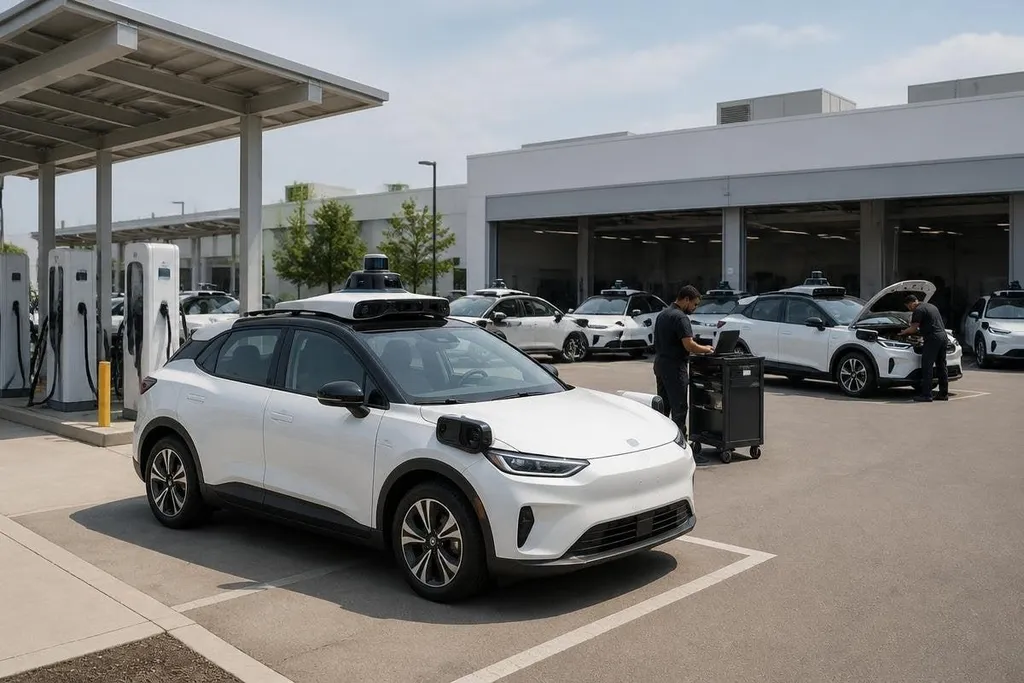
The robotaxi earns money when it carries a passenger, but the ride is only one part of the business. The larger opportunity may sit in fleet operations, charging, vehicle service, mapping, and software.
The open question for a company entering this market is simple: which part can it run well enough to earn money after the vehicle, power, insurance, and safety costs are paid?
- Passenger fares create the visible income
- Fleet services keep vehicles ready to work
- Software and data may shape the long-term cost
The fare is only the first layer
Every robotaxi trip needs a vehicle, a booking system, payment processing, roadside support, and a way to manage the car between rides. Each part creates a possible contract for a specialist company.
One fleet operator could run vehicles for an automaker or an autonomous-driving developer. Its work would include dispatching cars, checking faults, sending vehicles for service, and moving them to charging sites. The buyer could pay per vehicle, per trip, or through a fixed service contract.
That model changes the sales target. A company may sell to a fleet owner instead of trying to build a public ride service from the ground up. The buyer gets a ready operating team, while the service company earns money from the work that passengers never see.
Charging and service create repeat work
Electric robotaxis need regular charging, tire checks, cleaning, repairs, and inspection. A service business could handle one of those jobs or combine several at a depot.
The work has a clear link to vehicle use. Any car that waits for a technician cannot carry passengers, so a depot operator has a reason to track faults and return vehicles to service quickly. That does not make the work easy. Parts, trained staff, site leases, and local safety rules still shape the cost.
Charging sites may also become a separate business. One site owner could sell electricity to a fleet, manage charging schedules, and keep enough plugs free for vehicles that need to leave soon. The software must account for power limits and vehicle demand, or cars may gather at the wrong time.
Software can sit between every ride
Fleet software links bookings, vehicle locations, battery levels, service alerts, and remote assistance. Remote assistance means a trained person helps a vehicle handle a case it cannot resolve on its own; it does not mean that person drives every trip.
A software company could sell this system to several fleet operators. Its work would need to connect with vehicle computers, charging equipment, payment tools, and local dispatch rules. That creates a technical sales problem, since a system built for one vehicle may need major changes for another.
Mapping is another possible service. Robotaxis need road data that reflects lane changes, construction, pickup points, and access rules. A company that checks and updates this data could charge for coverage in each operating area.
A mapping contract only earns its fee when updates cut missed pickups, extra miles, or remote support. Robot24 can put the road data, vehicle route, test date, and business result beside a robotaxi claim. That leads to the next question: can the service save enough money to pay for itself?
The hard part is proving the cost
The plan can look attractive on a fare chart and still lose money after the full operating bill arrives.
That bill may include vehicle depreciation, charging, cleaning, repairs, insurance, customer support, remote staff, software, and depot space.
The same cost also affects suppliers. A mapping firm needs enough paying fleets to cover its data work. A depot operator needs enough vehicles using its site. A software vendor needs stable vehicle interfaces so every contract does not become a custom project.
The strongest business opportunities will probably sit beside the vehicle makers, not in every company trying to run a public fleet. I’d favor suppliers that can show a clear cost per vehicle and a contract structure that survives low demand.
A decision guide for new suppliers
Before building a robotaxi service, a company should check:
- Choose one job: decide whether the offer covers charging, service, fleet software, mapping, or another defined task.
- Name the buyer: identify the fleet owner, vehicle maker, software team, or depot operator that would sign the contract.
- Count the work: measure staff time, site costs, power use, parts, insurance, and software upkeep.
- Test the handoffs: check how the system connects with vehicles, payment tools, charging gear, and human support.
- Set a failure rule: decide when a contract loses money and what change would fix it.
A company that cannot answer those points has a concept, not a business plan. Passenger fares may attract the attention, but repeat service work will decide which suppliers remain after the first fleet launches.
The next useful proof will be a public contract showing the price per vehicle, the work included, and who pays for downtime. Until that appears, the best opportunity may be the part of the robotaxi that keeps moving after the passenger leaves.